ADA Certified Portable Toilets for Occasions: A Clear Guide to Accessibility Rules
If you have ever planned an occasion, you recognize how swiftly the fundamental logistics come to be the entire experience. Car parking, wayfinding, seats, food lines, color, lights, and washrooms all form whether guests really feel welcome or locked out. Mobile sanitation is among those details people just see when it fails. For handicapped visitors, it is not a minor information whatsoever. It can determine whether participating in fits, stressful, or just impossible.
That is why ADA gain access to around temporary toilet configurations is worthy of careful attention. An ada compliant mobile commode is not a wonderful additional for a big event or a corporate occasion. It is part of making the website useful by real people with real requirements. The federal policies are not mysterious, but they are frequently oversimplified in sales materials, and that develops issues. I have actually seen occasion organizers assume that ordering one larger unit fixes everything. It does not, at least not immediately. The system itself matters, yet placement, path, signage, and the general quantity issue too.
The most important location to start is the federal standard that regulates this problem in the United States. The controlling accessibility criterion for mobile commode rentals is the 2010 ADA Criteria for Accessible Design, as analyzed by the U.S. Access Board and the Department of Justice. For occasion coordinators, location managers, rental organizers, and districts, that implies you should think of portable bathrooms similarly you think of any type of other public accommodation attribute, with scoping requirements and technical demands that both matter.
The guideline individuals miss most often
For clusters of portable single user bathroom units, at the very least 5 percent of the devices in each cluster must come. That uses even at short-lived events.
That one sentence cleans up a lot of common confusion. If you set out a bank of portable commodes at a concert, road race, college fair, wedding place, or community event, you do not simply look at the event all at once and determine you have one easily accessible unit somewhere on the premises. The conventional relates to each collection. In practice, that matters since guests make use of the restroom nearest to where they are. An individual must not have to cross the occasion, navigate rough problems, or ask personnel for unique directions since the only ada portable toilet was positioned in a much corner.
This is where people often get floundered by informal language. You may listen to phrases such as ada available portable restroom, ada handicap available mobile restroom, or ada compliant available mobile toilets. Those expressions are common in the rental market, yet the genuine issue is not the tag on a web site. The concern is whether the real deployment meets the ADA scoping and technical requirements.
A collection based technique also aids with event layout. If your site has one commode group near the major phase, an additional near food vendors, and a 3rd near the parking area, the 5 percent policy puts on each collection, not just the complete order. That can affect the count you need and the delivery layout you approve.
Accessible does not mean simply larger
A bigger cabin alone does not make a device compliant. This is one of one of the most expensive misunderstandings in temporary cleanliness planning, since it is simple to uncover too late.
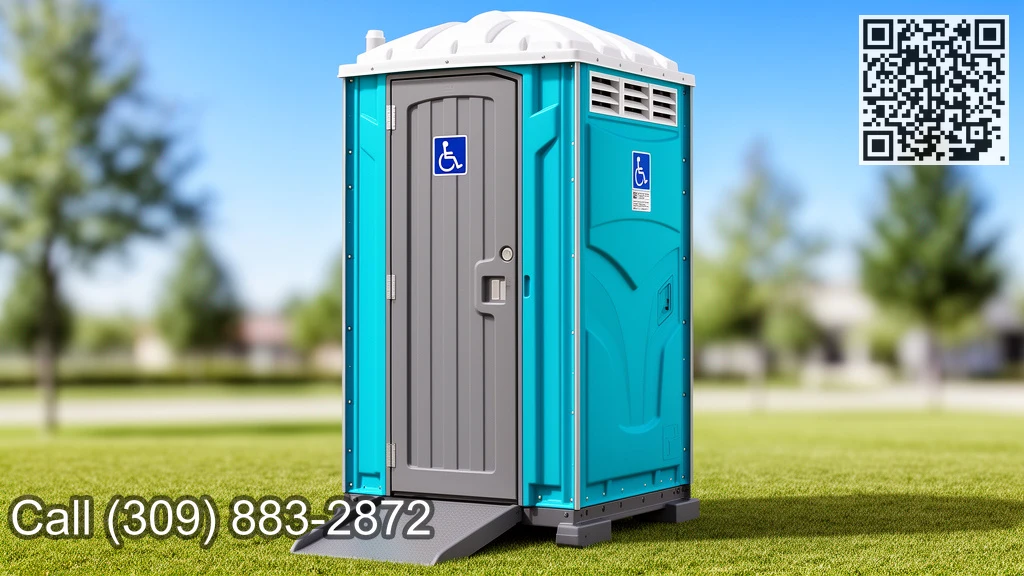
An ada compliant portable washroom should satisfy bathroom room technical demands. That consists of the features and clearances that allow somebody to really utilize the space, not simply enter it. The relevant policies include transforming space, component clearances, door navigating clearances, and the called for grab bar and water storage room clearance provisions. The requirements also need easily accessible portable units to be understood the International Sign of Accessibility.
Those information issue due to the fact that availability is functional. A person making use of a wheelchair, scooter, walker, or various other flexibility help requires sufficient area to approach, turn, placement, and exit securely. A device that looks roomy from the outside can still fall short being used if the interior design does not support maneuvering. The exact same holds true of doors. A door that technically opens can still be a barrier if maneuvering clearances are not there.
This is why I typically tell coordinators not to rely upon shorthand like "wheelchair pleasant" unless they have validated what the rental firm is really giving. When somebody asks whether a device is an ada portable bathroom or just a larger trailer style option, that is a reasonable concern. Advertising terms are not compliance.
The route to the bathroom matters as much as the toilet
One of one of the most discouraging website blunders is buying the correct device and after that positioning it where many handicapped visitors can not reach it.
Accessible mobile commode units must have an obtainable path and entrance. If ramps or landings are needed, those aspects need to comply with the ADA technological requirements too. This is where short-lived occasion truth rams ideal objectives. A field might look flat when vacant, after that become rutted after vehicle web traffic or rain. A gravel lot may feel convenient to an able bodied planner walking it in work boots, after that come to be laborious or dangerous for somebody using a movement tool. An aesthetic side, soft shoulder, wire cover, or sudden incline can transform the accessible bathroom right into a hard to reach destination.
I have seen good event groups repair this early by strolling the route as if they attended showing up from car park, not as a specialist approaching from the service lane. That change in viewpoint captures troubles that documentation misses. The path needs to be functional, direct, and linked to where people in fact relocate via the event.
The entrance location matters just as much. Even a compliant unit can be endangered if it is parked also close to fence, stacked against one more device, or positioned on unequal ground that disrupts access and https://rafaelccoo462.capitaljays.com/posts/ada-compliant-portable-commode-rental-what-the-2010-standards-require exit. Portable commode placement has a tendency to happen quickly during tons in, frequently under time pressure. That is precisely when mistakes happen, particularly if the distribution team is functioning from a harsh map instead of a clear website plan.
Why short-term occasions are not a loophole
Some coordinators still presume that an appear event, weekend event, or eventually fundraising event falls into a grey location. It does not. The Accessibility Board has actually explained that the obtainable unit requirement applies also at temporary events.
That point deserves repeating since short-term configurations can create a false feeling of flexibility. People in some cases believe the ADA primarily applies to long-term buildings and fixed washrooms. In truth, when you provide portable bathroom collections for the general public, availability still follows. The reality that the units can be carried away on Monday does not decrease the obligation on Saturday.
The very same useful reality puts on visitor assumptions. A disabled guest does not experience the event as less actual because it is momentary. If they can not utilize the washroom, can not reach it, or can not locate it, the occasion has failed them in an extremely prompt way.
The building and construction site exception, and why event organizers must be careful with it
There is a narrow item of context that occasionally gets duplicated too broadly. The ADA requirements traditionally distinguished portable toilet systems at building and construction websites used solely by construction personnel. In the cited 1991 standard, those were exempt from the mobile toilet availability scoping requirement.
That factor is real, yet it is often mistreated. It does not create a broad exception for general portable toilet leasings, and it does not clean away ease of access requirements for public events. If your restroom setup is for an occasion open to guests, guests, customers, viewers, or the public, you ought to not think that a construction website exception helps you.
This issues since some rental fleets serve both building and event markets. Devices may be defined likewise in discussion, however the conformity context is different. If you are getting for an event or neighborhood event, structure the order clearly as occasion use and confirm that you are obtaining ada certified portable toilets suitable to that use.
Quantity is about dignity, not just arithmetic
The 5 percent rule gives you a baseline, however good preparation does not stop at the minimum. Access is not just about lawful counting. It has to do with avoiding a scenario where handicapped guests face longer lines, fewer alternatives, or a washroom placed in the least practical location.
At crowded events, one available unit in a cluster might practically satisfy a minimum count and still develop pressure if the device is greatly used, badly kept, or difficult to get to. I am not suggesting an unstated lawful number past the requirement. Rather, I am recommending judgment. If you anticipate high attendance, long dwell times, or a broad age range, it is worth looking at your layout and asking whether the experience feels equitable.
That sort of judgment also secures the event group. A washroom trouble becomes a visible hospitality issue quick. Guests do not separate compliance from care. They bear in mind whether the website seemed made for them.
What to ask a portable toilet rental firm before delivery
Most issues with ada mobile toilet rental orders occur because the conversation remains also general. "We need one handicap system" is insufficient. You want a shared understanding of the device, the course, the signage, and the positioning plan.
Use inquiries like these when you speak with a vendor:
- For each restroom collection on the site, how many obtainable units are consisted of to satisfy the 5 percent requirement?
- Are the systems understood the International Icon of Accessibility?
- Does the device offered fulfill the relevant ADA commode area technical needs, including navigating space and clearances?
- What site problems are needed so the accessible entryway and route stay compliant?
- Can the shipment crew put the unit exactly where the available path on our website plan starts and ends?
Those inquiries are easy, yet they relocate the conversation far from unclear advertising and marketing labels and towards functional answers. They likewise make it simpler to coordinate the bathroom strategy with vehicle parking, paths, secure fencing, and group flow.
Common event configurations where ease of access obtains overlooked
The most common misses are not dramatic. They are average preparation shortcuts.
A rural wedding celebration on exclusive land might have beautiful sights and mindful decor, but the portable bathrooms end up across irregular yard or down an incline because that location is less visible in pictures. A charity run might place an accessible system near the start line, then include a second bathroom collection near the coating location without including an accessible unit there. A midtown road festival might purchase an ada compliant portable toilet, after that position it behind barriers or supplier lines that narrow the course. A school event might put the obtainable system where team can check it, yet much from the remainder of the bank, which separates customers rather than integrating access right into the basic setup.
None of these options always come from bad intent. They usually come from speed, practice, or an absence of experience with the rules. That is why ease of access preparation functions best when it begins early, while the website map is still flexible.
Signage is not a minor detail
Accessible mobile toilet devices have to be understood the International Icon of Accessibility. That is a conformity factor, yet it is likewise a sensible one. Individuals must not have to check every device straight to figure out which one is meant to be accessible.
At bigger occasions, clear identification minimizes awkwardness and assists staff straight visitors appropriately. It additionally makes the toilet financial institution easier to browse for caregivers, friends, and occasion volunteers. Signage will certainly not deal with a negative course or a poor format, yet it eliminates uncertainty, and uncertainty is commonly the first barrier a guest encounters.
The relationship in between conformity and trust
There is a more comprehensive factor this subject matters now. Access enforcement is occurring in a larger conformity atmosphere across industries. The Division of Justice has actually recently released guidance extending a significant internet and mobile access target date for sure state and local government entities into 2027, which shows proceeding ADA activity much more normally. That does not transform the mobile toilet policies themselves, but it does underscore something skilled operators already recognize. Ease of access is not wandering into the history. It is remaining on the agenda.
For occasion organizers, the lesson is uncomplicated. If your group is currently dealing with accessible parking, site information, ticketing language, or venue interactions, bathroom planning belongs in the exact same conversation. Guests experience access as one continual chain. A good registration page does not offset an unusable toilet location. A compliant bathroom unit does not help much if the course from decrease off to bathroom is blocked.
How to consider collections on a real site
The word cluster can feel abstract till you are basing on the premises with a supplier map. Consider a collection as a group of portable solitary user toilet devices offering a particular area. If your event impact is spread out, you may have several such groups. Every one requires its very own availability review.
This is specifically pertinent for events that broaden in phases. Organizers usually start with one count on the preliminary plan, then add one more near a beer garden, backstage area, VIP section, or overflow vehicle parking once attendance approximates change. That second addition can create a compliance void if the obtainable count is not recalculated by cluster.
Even little occasions can face this concern. A community fair with just a handful of devices might still split them in between two ends of the grounds. Once you separate the configuration, you need to stop believing in regards to one sitewide ada easily accessible portable washroom and start assuming in regards to accessibility any place toilet service is really provided.
A gentle criterion, not simply a legal one
It assists to bear in mind what this is really about. An available toilet arrangement offers people personal privacy, self-reliance, and a measure of convenience. It means a guest is not compelled to ask for unique help, leave early, or stay clear of consuming and drinking since they are unclear whether they can make use of the facilities. It enables family members to attend together with much less concern. It informs handicapped guests that their presence was anticipated, not dealt with as an exception.
That is why the expression ada certified portable bathrooms ought to imply more than a box looked at a rental order. It must suggest the washrooms are incorporated into the occasion in a manner that respects the people who will depend on them. Sometimes that indicates purchasing much more thoroughly. Sometimes it suggests readjusting the site plan, reconsidering a path, or refusing a placement that is practical for vehicles however not for guests.
The functional criterion to hold on your own to
When you evaluate your restroom strategy, a few inquiries will inform you whether you get on strong ground. Does each cluster include the required available device count? Are the easily accessible systems clearly determined? Can guests reach them by an obtainable path? Does the entry work in genuine website conditions, not just theoretically? And are you counting on real ADA technological compliance rather than a sales description?
If the response to any one of those questions is uncertain, pause and repair it prior to delivery day. Mobile bathroom concerns become much more challenging to fix as soon as the site is active, the crowd remains in area, and weather condition or traffic has altered the ground conditions.
An ada-compliant portable bathroom is not merely a larger box beside an occasion. It becomes part of the event's infrastructure, just as genuine and crucial as lights, fencing, or emergency treatment. When event planners treat it this way, the result is not only much better conformity. It is a more welcoming event, and guests can really feel the difference.
 Ask ChatGPT
 Ask Grok
 Ask Perplexity
 Ask Claude
 Ask Google AI
 Ask You